Email Us
Nanyang Goodway Machinery & Equipment Co., Ltd.
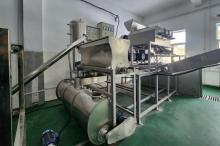
Automatic Coating-type Vermicelli Line
I WANT TO BUY PRODUCTS

Automatic Coating-type Vermicelli Line

CONTACT NOW

Features Related Products

Features of Automatic Coating-type Vermicelli Line

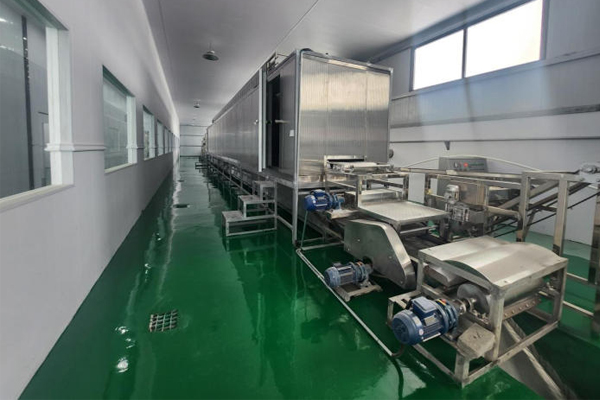
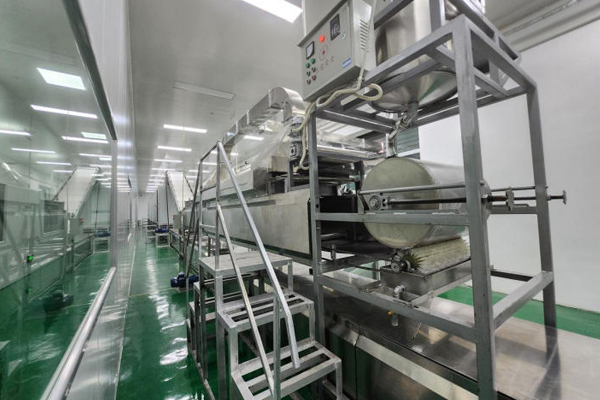
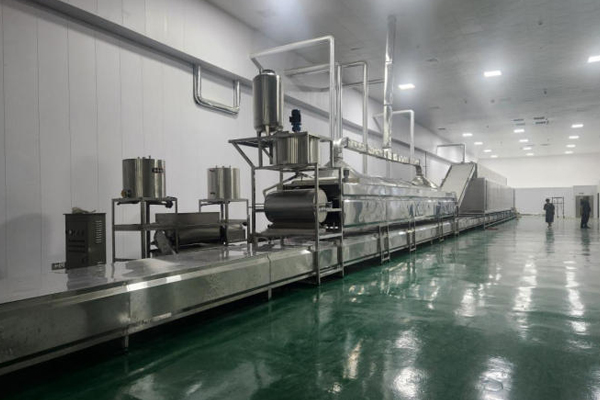
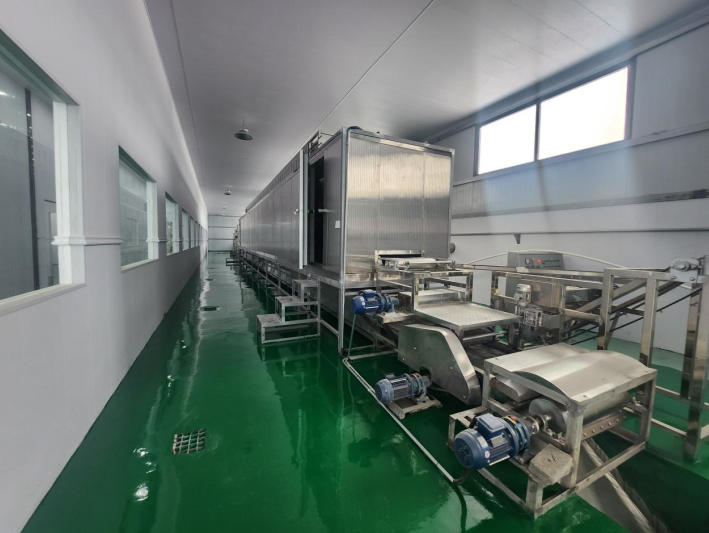
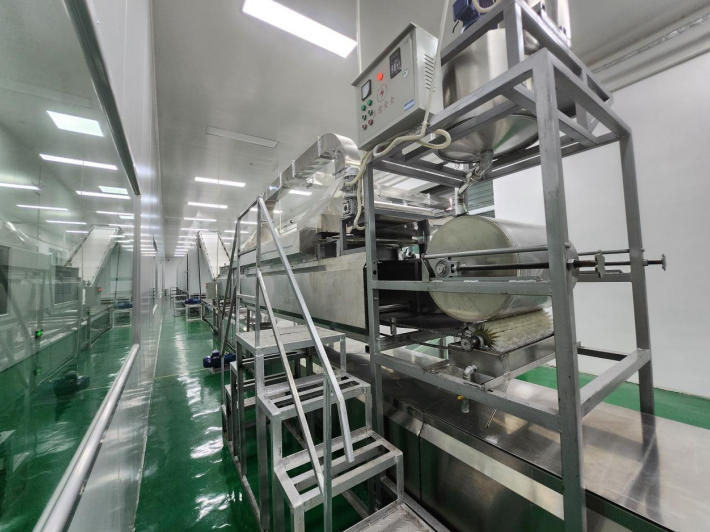
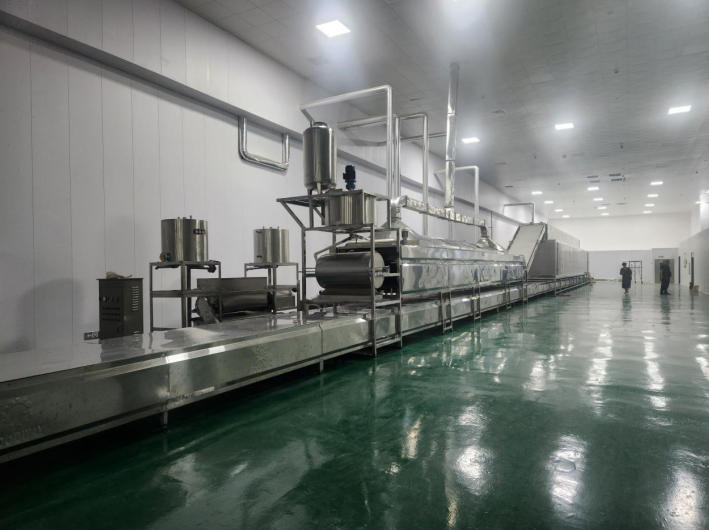
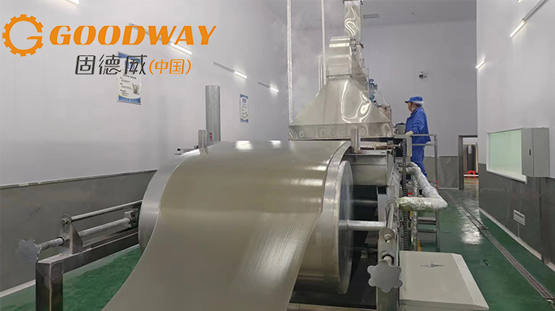
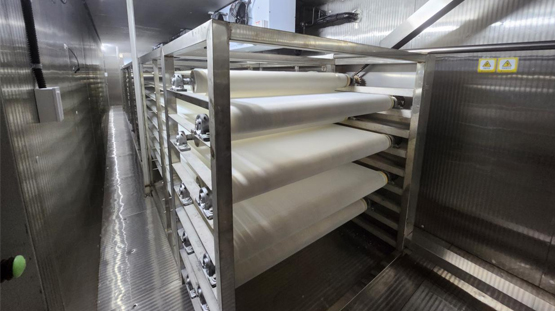
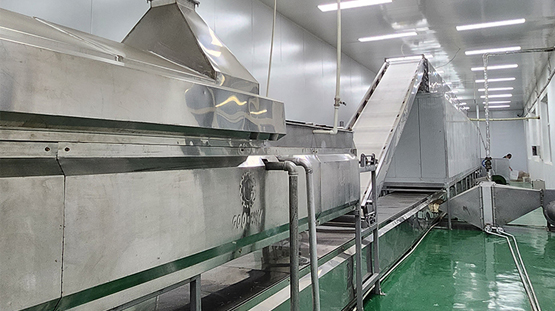
1.5-13 Tons/D Fully Automatic Coating-type Vermicelli Production Line


Core Advantages of This Production Line:

1. No Alum/Additives: Relies on vacuum degassing and steam gelatinization for physical shaping, complying with modern healthy food standards.

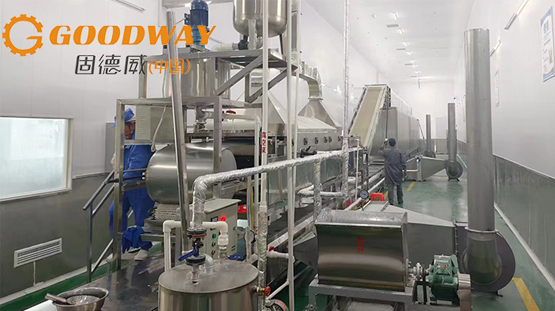
2. Continuous Operation: From raw material input to finished product output in one go, with daily outputs ranging from several tons to dozens of tons.

3. Stable Quality: Mechanical control eliminates human factors, resulting in products with uniform thickness, high boiling resistance, and clear soup.

4. Environmentally Friendly: Fully enclosed workshop production with no direct wastewater discharge (compared to traditional washing processes), ensuring cleanliness and hygiene.

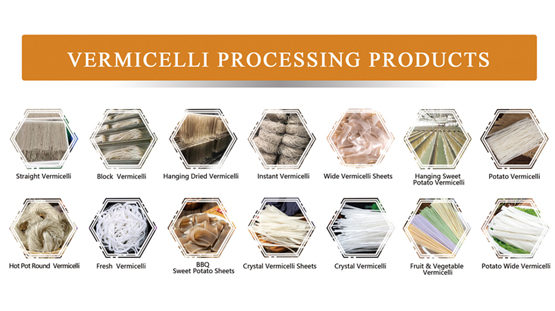
This process is particularly suitable for large-scale enterprises producing vermicelli from starches such as sweet potato, potato, and pea.


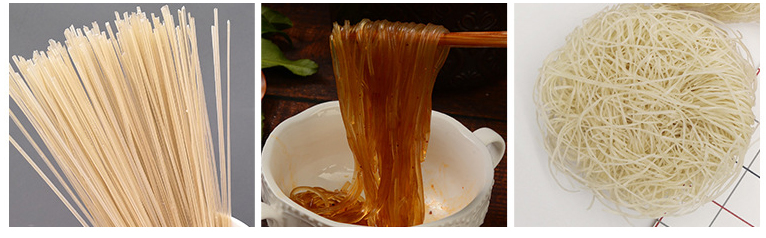
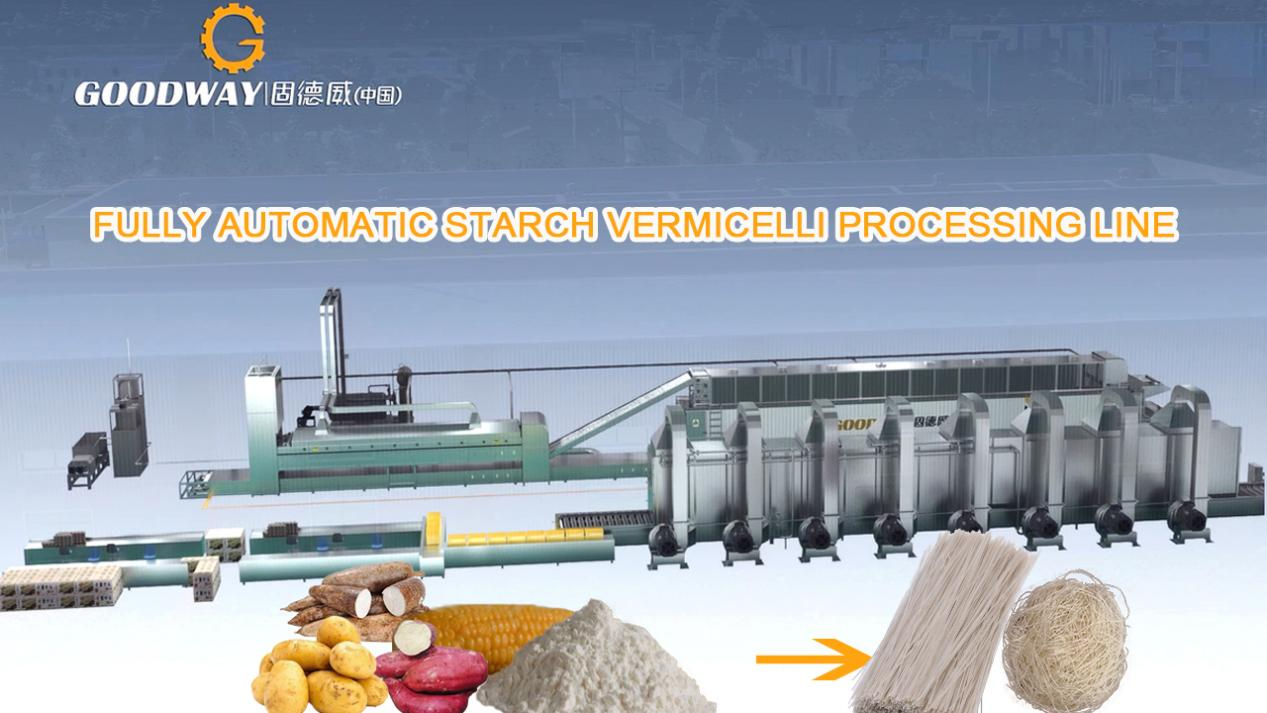
The fully automatic coating-type vermicelli production line (also known as the "spreading" or "steaming-instead-of-boiling" process) is currently one of the most advanced technologies for vermicelli processing. It abandons traditional ladle-leaking methods and the use of alum, achieving closed-loop, continuous, and automated production.
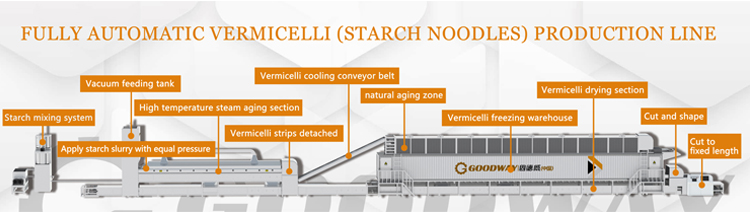
Its core process flow typically consists of the following 10–14 main steps, from starch input to dry vermicelli output, requiring minimal manual intervention:


  • Raw Material Proportioning and Slurry Mixing
    Raw Material Proportioning and Slurry Mixing

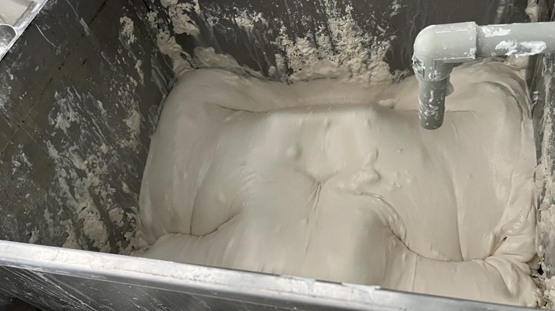
    Operation: Starch raw materials (such as sweet potato or potato starch) and water are automatically injected into a mixing tank in precise proportions.
    Feature: A PLC system automatically controls the water-to-starch ratio to ensure stable slurry concentration, which is the foundation for determining the texture of the vermicelli.

  • Vacuum Degassing
    Vacuum Degassing

    Operation: The mixed slurry enters a vacuum mixer, where negative pressure is used to extract air bubbles from the slurry.
    Function: This is a critical step. Removing bubbles increases slurry density, preventing hollow cores or breakage in the vermicelli, significantly enhancing the toughness and transparency of the final product.

  • Coating and Spreading
    Coating and Spreading

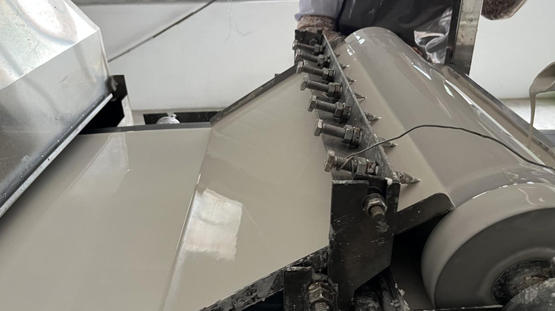
    Operation: The degassed slurry is pumped onto a conveyor belt (usually stainless steel or mesh) and evenly spread via a scraper or roller.
    Feature: The thickness (determining vermicelli gauge) and width of the starch sheet can be precisely adjusted, replacing the instability of traditional manual ladle leaking.

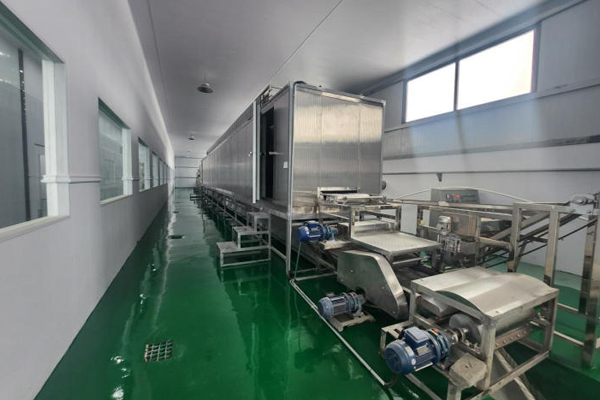
  • Steam Gelatinization
    Steam Gelatinization

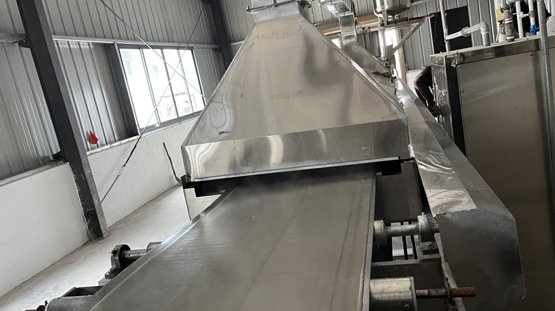
    Operation: The coated starch sheet directly enters a high-temperature steam box for instant gelatinization.
    Advantage: "Steaming instead of boiling" avoids nutrient loss and soup cloudiness caused by boiling. Heating is more uniform with no undercooked parts. This process typically requires no alum, relying on physical gelatinization for shaping.

  • Cooling and Setting
    Cooling and Setting

    Operation: Immediately after exiting the steam box, the gelatinized starch sheet enters a cooling section .
    Function: Rapid cooling stabilizes the starch structure, facilitating subsequent stripping and cutting, and preventing sticking.

  • Stripping and Peeling
    Stripping and Peeling

    Operation: The cooled starch sheet (now a cooked starch ribbon) is automatically peeled off the conveyor belt.
    Feature: Automated equipment is usually designed with special stripping mechanisms to ensure the starch sheet remains intact without breaking.

  • Aging (Retrogradation)
    Aging (Retrogradation)

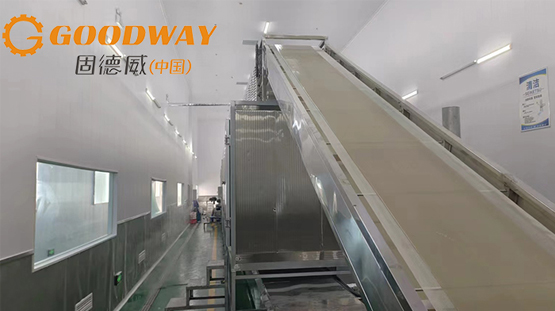
    Operation: The starch sheets enter an aging room or tunnel.
    Types:Room Temperature Aging: Natural retrogradation to increase toughness.
    Low-Temperature Freezing Aging (in some high-end lines): Starch molecules are rearranged via freezing, greatly improving the boiling resistance and chewiness of the vermicelli (mimicking the principle of traditional frozen vermicelli).

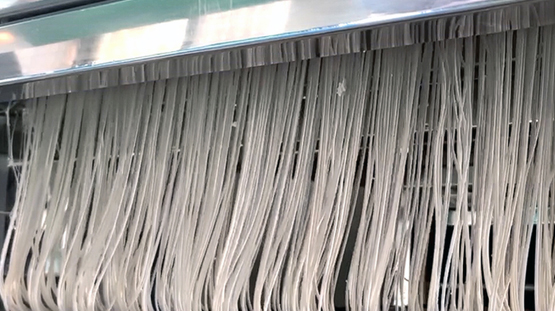
  • Vertical Cutting and Slitting
    Vertical Cutting and Slitting

    Operation: The aged wide starch sheets pass through a multi-blade cutting machine to be cut longitudinally into thin strips.
    Feature: Blade spacing is adjustable, allowing for the production of different specifications (e.g., fine glass noodles or wide flat noodles).

  • Drying
    Drying

    Operation: The cut wet vermicelli enters a multi-layer drying room or drying tunnel.
    Feature: Intelligent temperature control and dehumidification simulate natural sun-drying but with higher efficiency, avoiding dust contamination and weather dependence associated with outdoor drying. Moisture content is reduced to safe standards (typically below 14%).

  • Cutting and Packaging
    Cutting and Packaging

    Operation: The dried long vermicelli is cut to specific lengths as required, then automatically weighed, bagged, and sealed.
    Result: Production of finished dry vermicelli ready for market.


Related Products Automatic Coating-type Vermicelli Line


  • Extrusion Type Vermicelli Line

    300-600 Kg/h Extrusion Type Vermicelli Production LineThe Extrusion Type Vermicelli Production Line is currently one of the most widely applied and technologically mature processing methods in the mar... Extrusion Type Vermicelli Line
Leave a Message Email Us

we will contact you within 24 hours.