Email Us
Nanyang Goodway Machinery & Equipment Co., Ltd.
Extrusion Type Vermicelli Line
I WANT TO BUY PRODUCTS

Extrusion Type Vermicelli Line

CONTACT NOW

Features Related Products

Features of Extrusion Type Vermicelli Line

300-600 Kg/h Extrusion Type Vermicelli Production Line

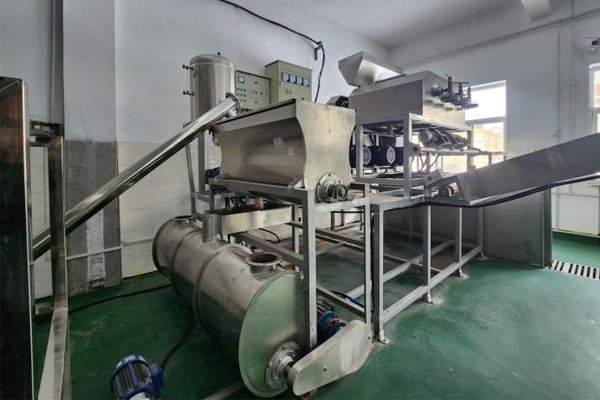
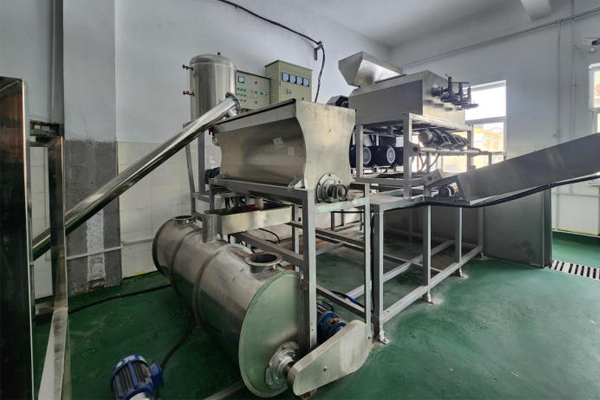
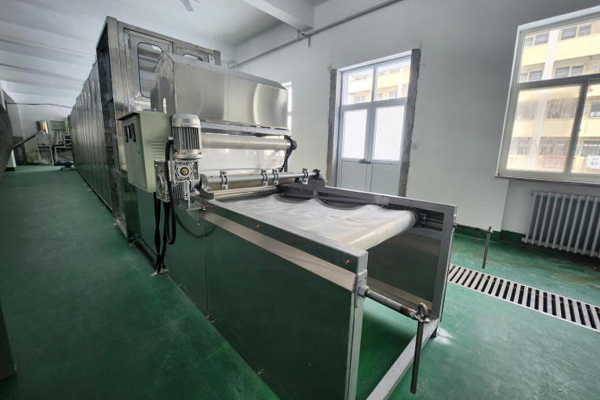
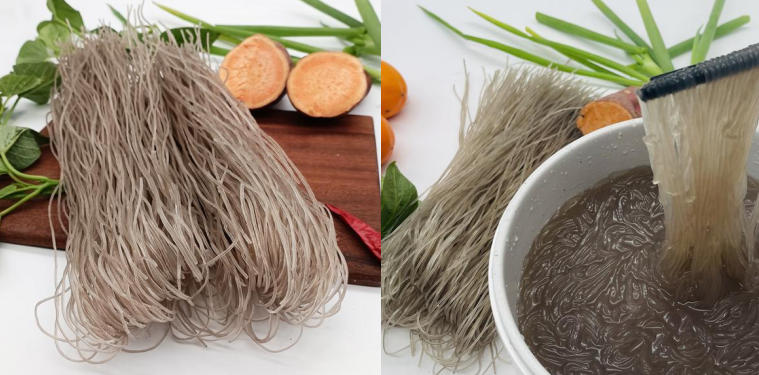
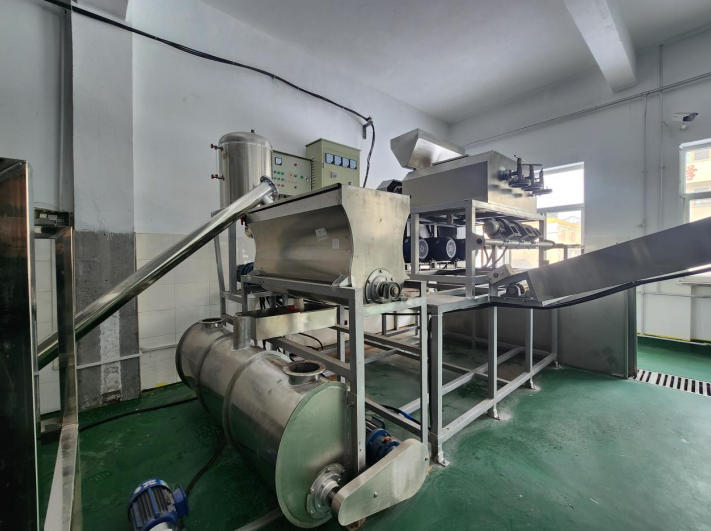
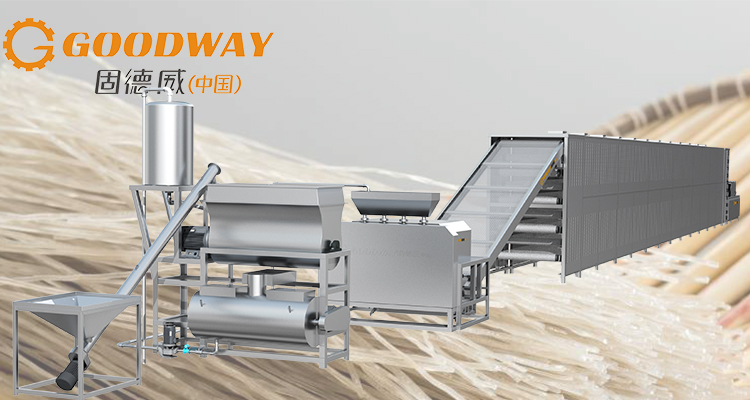
The Extrusion Type Vermicelli Production Line is currently one of the most widely applied and technologically mature processing methods in the market. Unlike the "Coating Type," the extrusion method utilizes the principle of screw extrusion to gelatinize the starch and force it through a die for shaping.

Core Advantages of Extrusion-Type Vermicelli

1. Strong Adaptability & Wide Raw Material Scope

Versatile Raw Materials: This is the greatest advantage of the extrusion method. It is not only suitable for sweet potato and potato starch but also highly effective for miscellaneous grains with lower amylose content or poorer viscosity, such as corn, wheat, buckwheat, and mung bean.

High Adaptability: The extruder head allows for easy die changes, enabling the production of vermicelli in various thicknesses.

Flexible Purity Requirements: It has relatively relaxed requirements for starch purity, making it ideal for producing functional vermicelli blends using various mixed grains.

2. Compact Process & Moderate Investment Cost

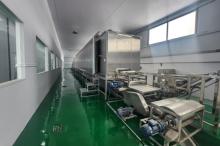
High Equipment Integration: The system integrates gelatinization and shaping into a single unit. It eliminates the need for large steam boxes and complex slurry-spreading equipment, resulting in a small footprint.

High Cost-Performance Ratio: Compared to coating-type production lines, extrusion lines typically feature lower equipment costs and simpler maintenance. This makes them highly suitable for both small-to-medium enterprises (SMEs) and large-scale processing plants.

3. Chewy Texture & Excellent Boiling Resistance

High Density: Due to the high-pressure screw extrusion process, the internal structure of the vermicelli is compact and dense.

Q-Elastic Mouthfeel: The resulting vermicelli offers a smooth, chewy, and resilient texture that resists breaking down even after prolonged boiling. This makes it particularly ideal for applications like hot pots and stews.


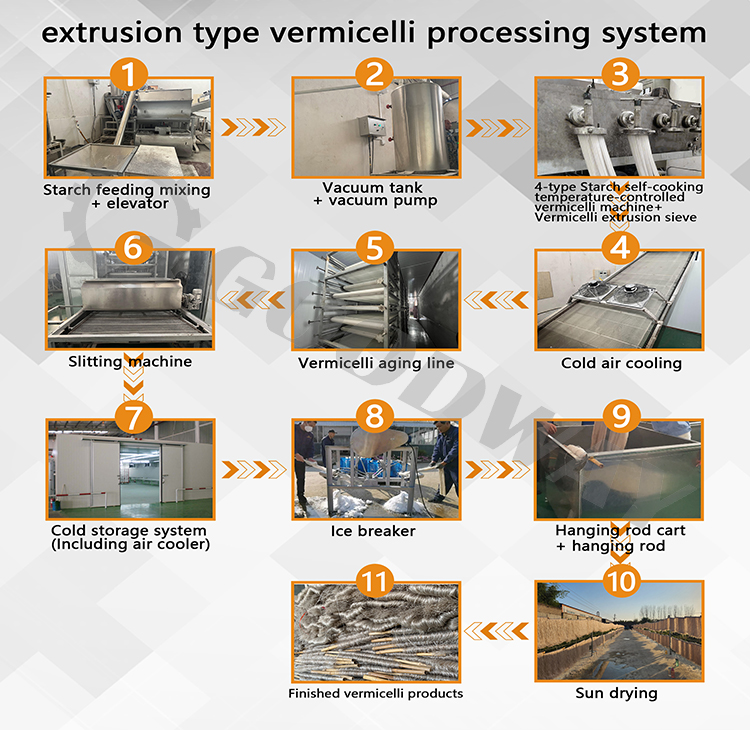
The main production process of the extrusion-type vermicelli line is generally divided into four major stages: Pretreatment, Extrusion Gelatinization, Cooling & Aging, and Drying & Packaging. The specific steps are as follows:


  • Raw Material Mixing & Extrusion Gelatinization
    Raw Material Mixing & Extrusion Gelatinization

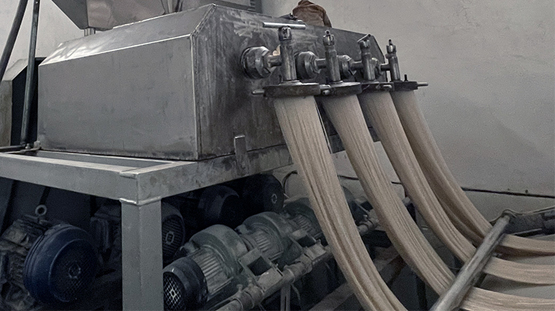
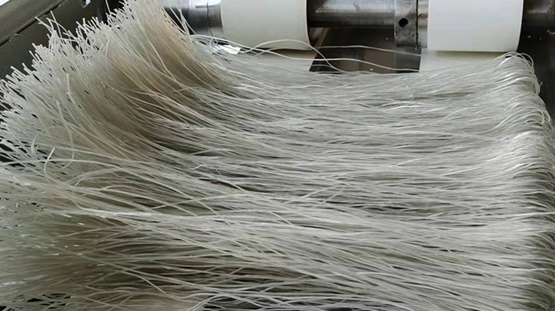
    Operation: Selected starch and water are mixed in precise proportions and fed into a screw extruder. Inside the barrel, the mixture undergoes instant α-gelatinization under high temperature and high pressure, then is forced through a die plate to form continuous wet vermicelli strands.
    Status: The vermicelli emerges hot, soft, and highly sticky.

  • Forced Air Cooling & Setting
    Forced Air Cooling & Setting

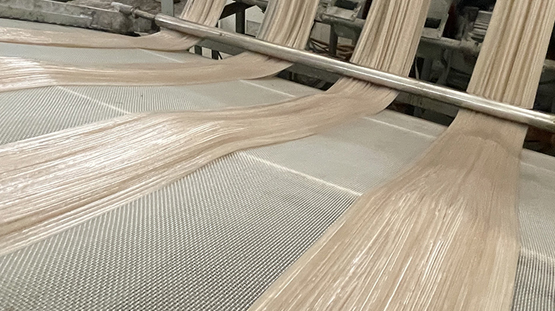
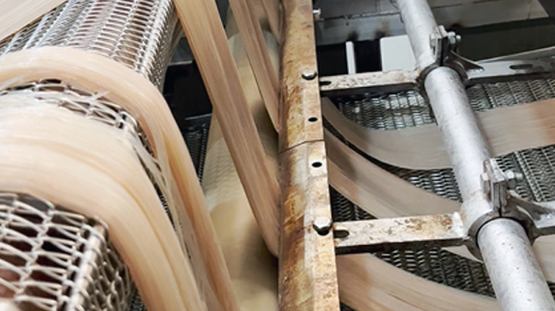
    Operation: The freshly extruded hot vermicelli immediately passes through a forced air cooling system.
    Function: High-speed airflow rapidly removes surface heat and excess moisture, causing the surface to harden quickly and form a protective film. This prevents strands from sticking together during subsequent transport and prepares them for the aging process.

  • Room Temperature Natural Aging
    Room Temperature Natural Aging

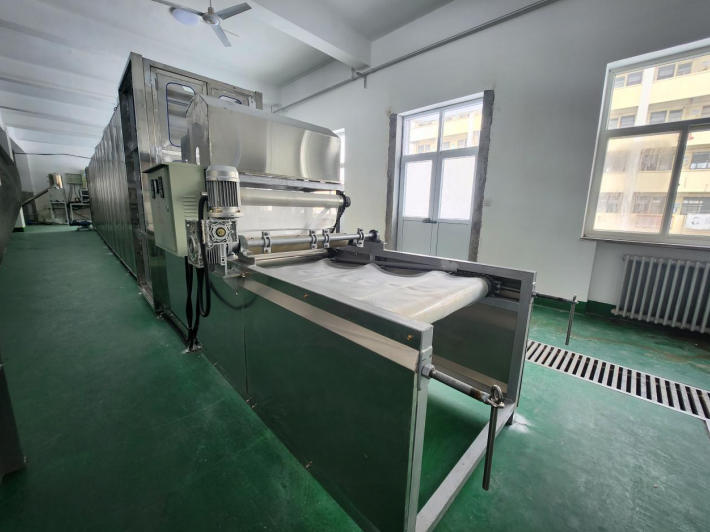
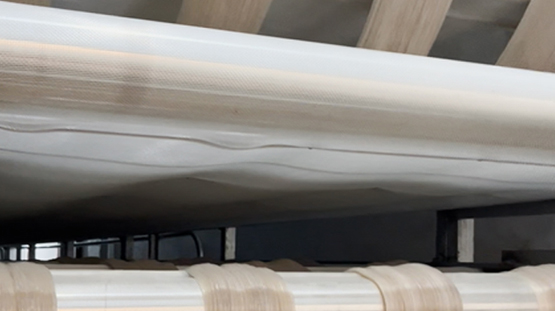
    Operation: The cooled vermicelli enters an aging conveyor belt for initial static resting at ambient temperature.
    Function: This allows internal moisture to equilibrate and initiates starch retrogradation (molecular reorganization), increasing the initial toughness of the strands and laying the foundation for the subsequent freezing step.

  • Cutting & Hanging on Rods
    Cutting & Hanging on Rods

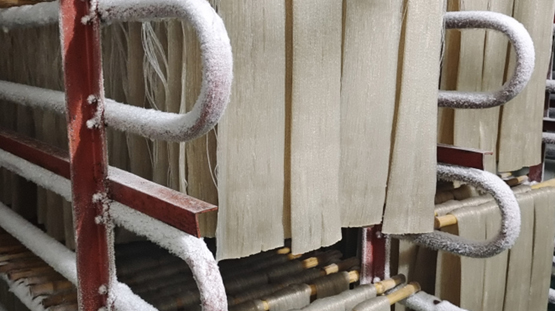
    Operation: The preliminarily aged long strands are cut to specific lengths and neatly hung onto drying rods (manually or semi-automatically).
    Feature: At this stage, the vermicelli has gained sufficient strength to be handled without breaking, making it ready for suspension in the freezer.

  • Freezing Aging (Cryogenic Aging) — The Core
    Freezing Aging (Cryogenic Aging) — The Core "Soul" Step

    Operation: The rod-hung vermicelli is transferred into a freezing chamber (typically below -18°C / 0°F) for deep freezing.
    Principle: Free water inside the vermicelli turns into ice crystals, which expand in volume. This expansion creates a fine, honeycomb-like micro-porous structure within the strands. This physical change is the key to the vermicelli's signature chewiness, boiling resistance, and rapid rehydration capabilities.

  • De-icing, Soaking & Hand Rubbing Separation
    De-icing, Soaking & Hand Rubbing Separation

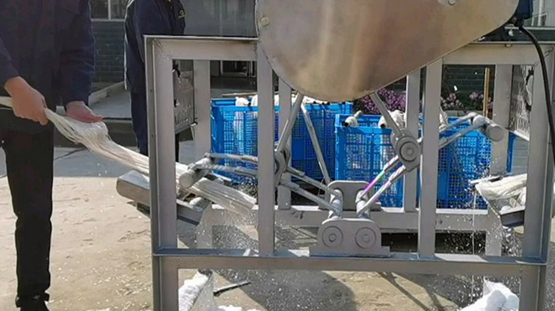
    Operation:1. De-icing & Soaking: The frozen vermicelli is removed from the freezer and submerged in clean water pools. The ice crystals melt rapidly, softening the strands.2. Hand Rubbing Separation: Workers manually rub and agitate the strands in the water. This friction and water flow gently separate the strands that fused together during freezing.

  • Natural Sun Drying
    Natural Sun Drying

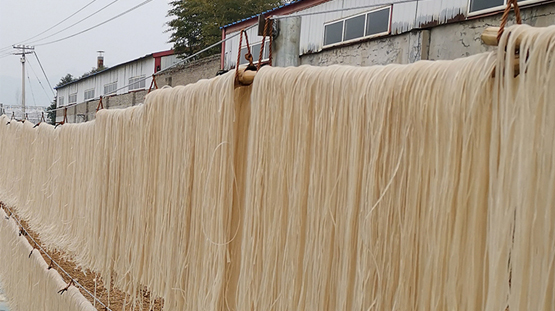
    Operation: The washed and separated wet vermicelli is hung outdoors or in solar drying rooms for natural sun drying.
    Feature: Utilizing natural sunlight (which provides UV sterilization) and wind for dehydration. The moderate drying speed of nature helps further stabilize the internal structure, imparting a unique "sun-kissed" flavor and a firm, pleasant texture that machine drying cannot replicate.

  • Final Cutting & Packaging
    Final Cutting & Packaging

    Operation: Once dried to a safe moisture content (typically <14%), the dry vermicelli undergoes precise final cutting, weighing, and automatic sealing into bags.
    Result: Production of high-quality, traditional-flavor dry vermicelli ready for the market.


Related Products Extrusion Type Vermicelli Line


  • Automatic Coating-type Vermicelli Line

    1.5-13 Tons/D Fully Automatic Coating-type Vermicelli Production LineThe fully automatic coating-type vermicelli production line (also known as the "spreading" or "steaming-instead-of-boiling" process... Automatic Coating-type Vermicelli Line
Leave a Message Email Us

we will contact you within 24 hours.