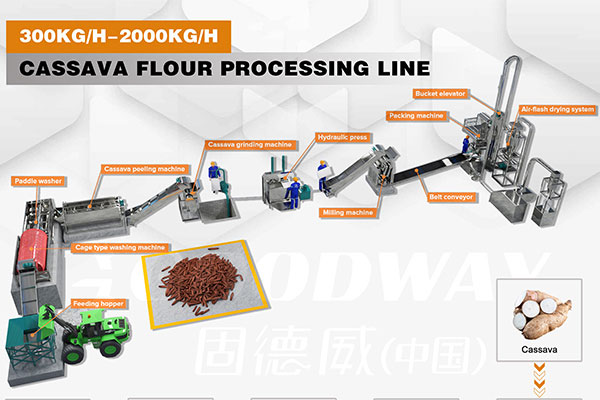
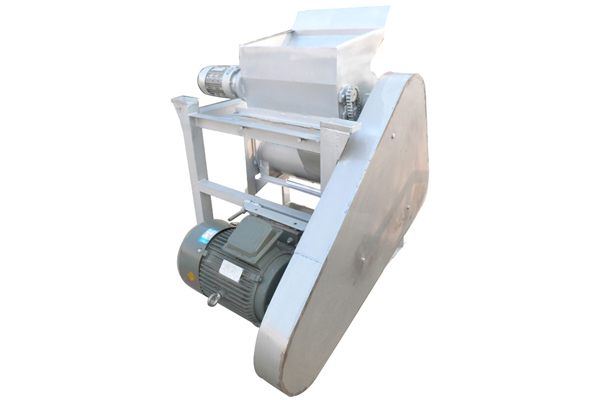
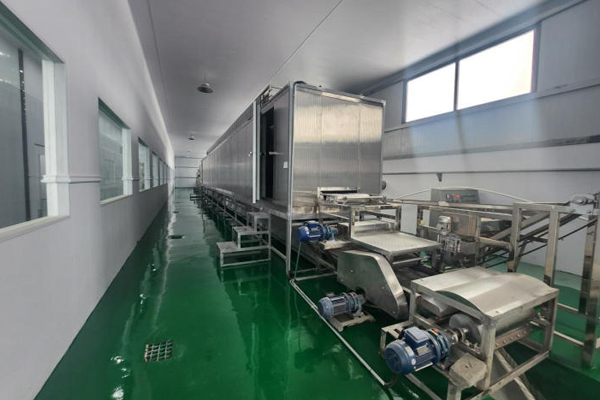
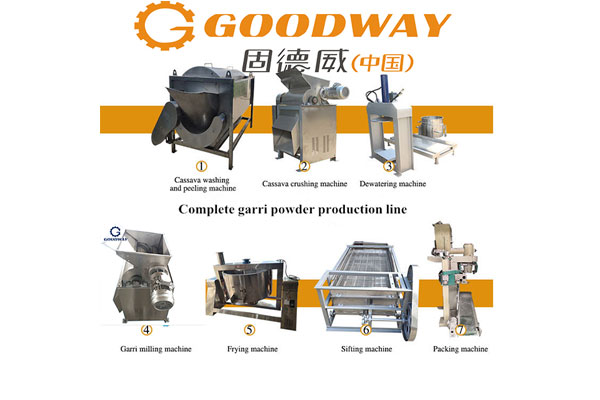
An industrial fufu processing machine is only one part of a complete fufu production system. For commercial processors, consistent product quality depends on how cassava is prepared, fermented, pressed, dried, and milled through each stage. The right equipment configuration therefore needs to consider the complete process flow, target capacity, raw material characteristics, and the relationship between individual machines rather than focusing on a single machine alone.
What Is an Industrial Fufu Processing Machine?
An industrial fufu processing machine refers to equipment used to mechanize one or more stages of fufu production from cassava. Depending on the production setup, the equipment may cover cassava washing, peeling, grating or milling, fermentation handling, pressing, drying, and final processing.
Compared with manual processing, industrial equipment allows processors to handle larger quantities of cassava with more consistent operating conditions. The exact configuration depends on whether the project produces fresh fufu, fermented cassava dough, dried fufu flour, or another finished product.
GOODWAY provides a fufu machine range for commercial cassava processing applications. For buyers, the important point is to define the required process first and then determine which equipment should be included in the line.
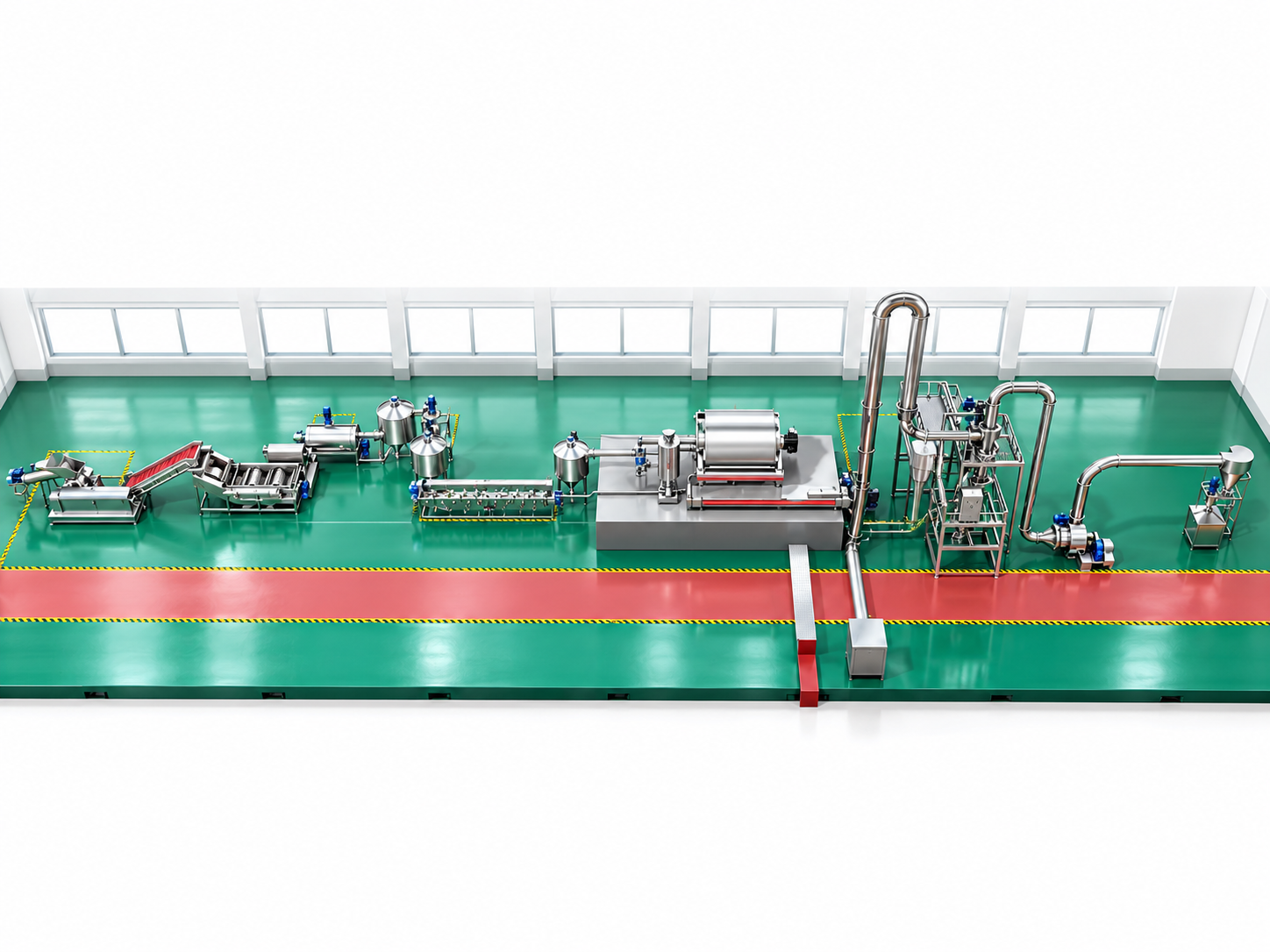
Which Steps Should an Industrial Fufu Production Line Include?
The production flow depends on the final product specification, but a commercial cassava-based fufu line commonly involves several connected stages. Each stage prepares the material for the next one, so capacity should be coordinated throughout the process.
A typical process may include:
Washing: Removes soil, sand, and other surface impurities from freshly harvested cassava.
Peeling: Removes the outer skin before further processing.
Grating or milling: Breaks cassava into a suitable form for fermentation and subsequent processing.
Fermentation: Allows the cassava material to undergo the required fermentation process.
Pressing: Reduces moisture after fermentation and prepares the material for further processing.
Drying: Used when the target product requires lower moisture content or a flour-like form.
Final milling: Produces the required particle size and consistency.
GOODWAY's cassava processing machine range covers equipment for different stages of cassava processing, allowing buyers to consider individual machines as part of a broader production system.
How to Match Fufu Line Capacity with Fermentation, Pressing and Drying
Capacity planning for a fufu processing line should start with the overall production target rather than the rated capacity of one machine. Fresh cassava may move through washing, grating, fermentation, pressing, drying, and milling at different rates, so each stage needs to be considered as part of the same workflow.
Fermentation is particularly important because it is not simply an hourly processing operation. The required fermentation time and available holding capacity determine how much material can be prepared for the next stage. If upstream equipment processes cassava faster than the fermentation stage can handle, material may accumulate and disrupt the production schedule.
The same principle applies after fermentation. Pressing equipment needs to handle the fermented cassava at the required rate, while drying capacity should correspond to the amount of moisture that needs to be removed. A line with a high-capacity grater but insufficient pressing or drying capacity can therefore have a lower practical output than its largest machine suggests.
| Processing Stage | Capacity Consideration | Potential Bottleneck |
|---|
| Cassava preparation | Fresh cassava input per hour | Insufficient washing, peeling, or grating capacity |
| Fermentation | Batch size and fermentation time | Limited holding or fermentation capacity |
| Pressing | Fermented material handled per cycle or hour | Slow moisture removal |
| Drying | Material volume and moisture load | Insufficient drying capacity |
| Final milling | Required finished-product output | Milling capacity lower than upstream flow |
For example, if a project targets a specific daily output, the calculation should consider actual operating hours rather than simply multiplying a machine's nominal hourly capacity. Fermentation time, batch intervals, material losses, and downtime can all affect the final production rate. This makes line-level capacity planning more useful than selecting equipment based on a single advertised throughput figure.
Fufu Machine, Grinder and Milling Equipment: What Each Stage Does
Different machines perform different functions, even when suppliers use broad terms such as “fufu machine.” Understanding these roles helps buyers avoid selecting equipment based only on product names.
Grating or grinding equipment: Reduces prepared cassava into a suitable form for fermentation or subsequent processing.
Pressing equipment: Removes excess moisture from fermented cassava material and prepares it for the next stage.
Drying equipment: Reduces moisture when the production process requires dried fufu or fufu flour.
Milling equipment: Controls the final particle size and helps achieve the required consistency.
Integrated processing equipment: Connects several operations where the project requires a more continuous production flow.
The appropriate combination depends on the final product. A fresh fufu production line may not require the same drying and milling configuration as a line producing shelf-stable fufu flour. This is why equipment selection should follow the intended product and process requirements rather than relying on a standard machine combination.
How to Prepare an RFQ for a Fufu Processing Project
A detailed RFQ gives equipment suppliers enough information to develop a suitable line configuration. Instead of asking simply for the price of a fufu machine, buyers should describe the intended production process and operating conditions.
The RFQ should include the target production capacity, raw cassava condition, final product type, fermentation requirements, pressing and moisture-removal requirements, whether drying and milling are needed, available electricity and water, operating hours, and available factory space.
It is also useful to explain which equipment is already installed if the new machines will be integrated into an existing line. GOODWAY's range of cassava processing machines can be considered according to the required processing stages. Providing complete process information makes it easier to determine whether individual machines or a more comprehensive line configuration is appropriate.

Conclusion
An industrial fufu processing machine should be selected as part of a complete production workflow rather than as an isolated piece of equipment. Washing, peeling, grating, fermentation, pressing, drying, and milling each have different functions and capacity requirements. By defining the final product, production target, raw material condition, and required process stages in advance, buyers can build a more balanced fufu processing line and reduce capacity conflicts between individual machines.
FAQ: Industrial Fufu Processing Machine Selection
What is an industrial fufu processing machine used for?
It is used to mechanize one or more stages of commercial fufu production, including cassava preparation, grating, pressing, drying, or milling.
What machines are normally included in a fufu processing line?
The configuration depends on the final product but may include washing, peeling, grating, fermentation, pressing, drying, and milling equipment.
How should fufu processing capacity be calculated?
Capacity should be based on fresh cassava input, operating hours, fermentation requirements, final product output, and the capacity of each major processing stage.
Is drying always required for fufu production?
No. Drying depends on the target product. Fresh or fermented fufu products may follow a different process from dried fufu flour.
What should I provide when requesting a fufu processing machine quotation?
Provide the target capacity, raw cassava condition, final product, fermentation requirements, moisture target, available utilities, and installation conditions so the supplier can recommend an appropriate configuration.
 EN
EN
 fr
fr  es
es  it
it  pt
pt