A cassava flour machine price cannot be judged from one machine quotation because commercial flour production normally requires several connected processing stages. A small semi-automatic setup and a complete 2,000 kg/h production line have very different equipment, utility and labor requirements.
For buyers, the useful question is not simply “How much does a machine cost?” but what capacity, finished-flour specification and automation level the investment must support. Equipment configuration, grinding performance, drying method, yield and local energy costs all affect the final project budget.
How Much Does a Cassava Flour Processing Machine Cost?
Cassava flour machine price depends mainly on production capacity, equipment configuration, automation, material and project scope.
Buying only a grinder or mill costs much less than installing a complete washing-to-packing system. A full project may also require conveyors, motors, electrical controls, installation and commissioning.
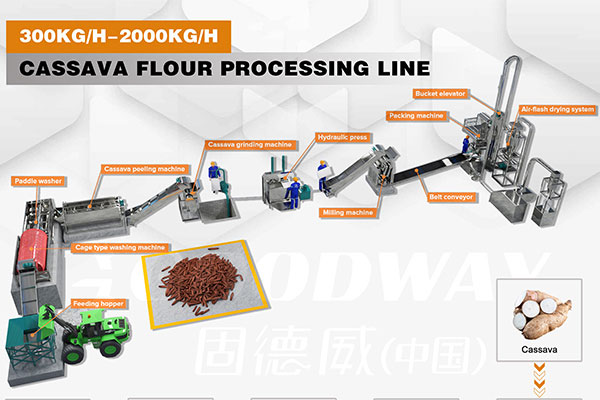
Goodway currently offers complete cassava flour lines with published finished-output capacities of approximately 300–2,000 kg/h, while its project portfolio includes a 500 kg/h cassava flour processing project in Cameroon.
When comparing quotations, buyers should therefore confirm exactly which equipment and services are included rather than comparing headline prices alone.
What Machines Are Included in a Cassava Flour Production Line?
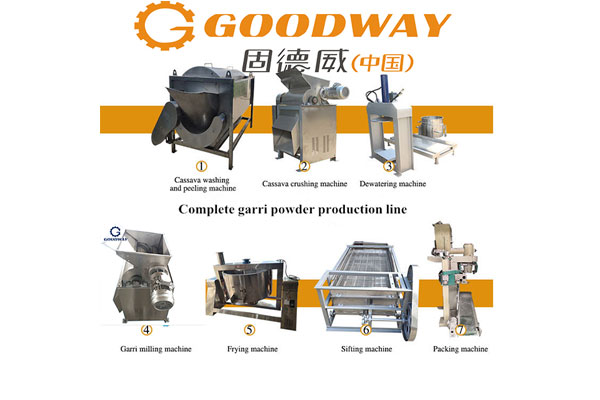
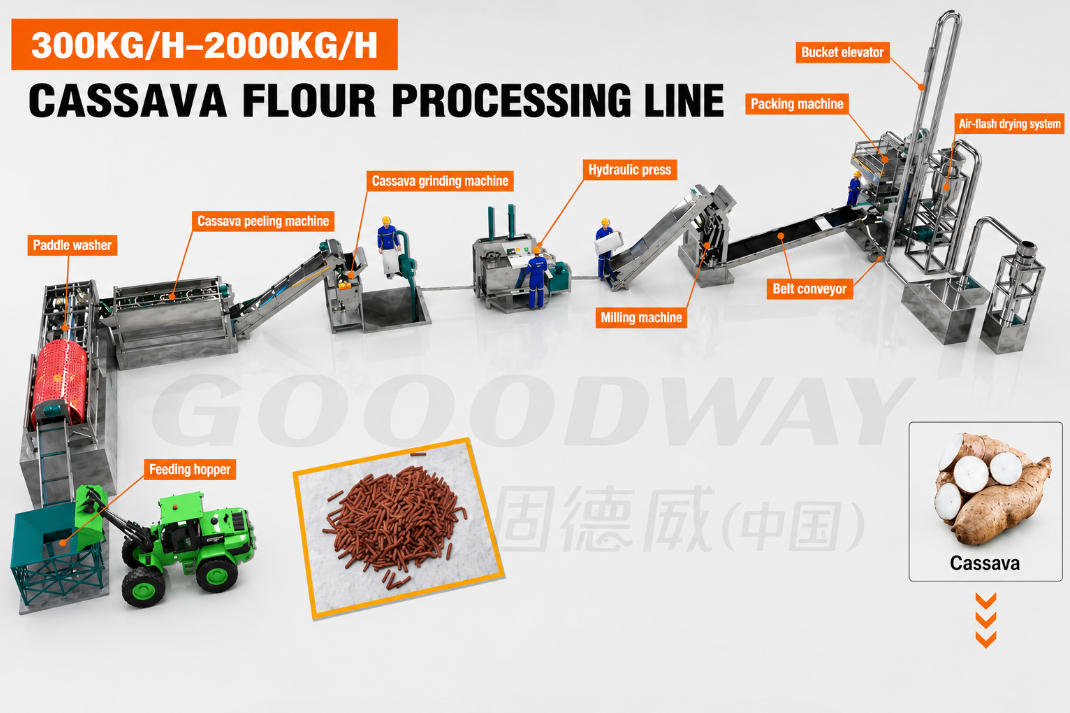
A cassava flour production line typically converts fresh roots into packaged flour through washing, peeling, grinding, dewatering, drying, milling and packing.
A complete line may include:
-
Washing equipment: removes soil, sand and surface contaminants.
-
Peeling machine: removes the outer cassava peel.
-
Grinding or grating machine: reduces roots into mash.
-
Dewatering equipment: removes part of the moisture before drying.
-
Drying system: reduces moisture to a level suitable for milling and storage.
-
Flour milling machine: produces the required particle fineness.
-
Screening and packing equipment: improves consistency and prepares the final product for sale.
Goodway lists these stages within its cassava processing machine range, including washers, peelers, grinders, dewatering systems, dryers and flour mills.
How Capacity Changes Cassava Flour Processing Machine Price
Cassava flour processing machine price generally increases with capacity because larger output requires higher-throughput equipment, motors, dryers and material-handling systems.
Capacity should be based on both fresh cassava availability and target finished output. A processor receiving only a few tons of roots per day may waste capital by installing a line designed for much larger production.
Goodway's complete flour line covers approximately 300–2,000 kg/h finished output, but individual machines can have different rated capacities. For example, its cassava grinding equipment is published at 3–6 tons/h, meaning downstream dewatering and drying capacity must still be matched carefully.
How Grinding and Milling Equipment Affect Cassava Flour Quality and Cost
Grinding and milling affect flour uniformity, throughput, power consumption and the ability to meet the required final particle size.
Grinding converts fresh cassava into mash before dewatering, while final milling converts dried material into finished flour. These are separate functions and should not be sized independently.
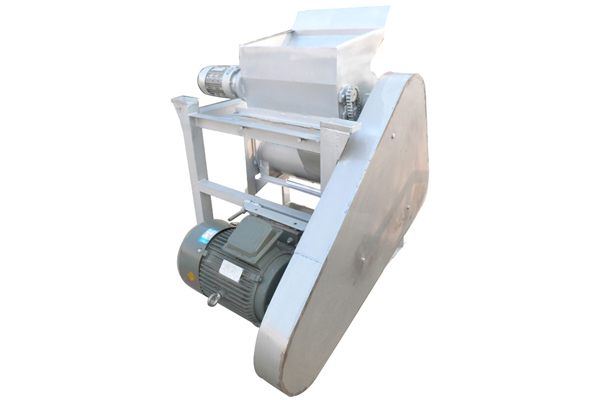
Goodway's grating machines are published at 3 and 6 tons/h, with 11 kW and 15 kW motor options. When comparing cassava grinding machine price, buyers should therefore consider capacity and power together with grinding consistency.
Goodway also lists a flour milling capacity of approximately 400–500 kg/h for one current milling configuration.
How Drying Equipment Affects Production Cost
Drying can strongly influence cassava flour production cost because moisture removal requires both equipment investment and ongoing energy consumption.
Natural drying reduces equipment cost but depends on weather, available space and longer processing time. Mechanical drying provides more consistent production and is generally more suitable for commercial plants, but fuel or electricity becomes an operating expense.
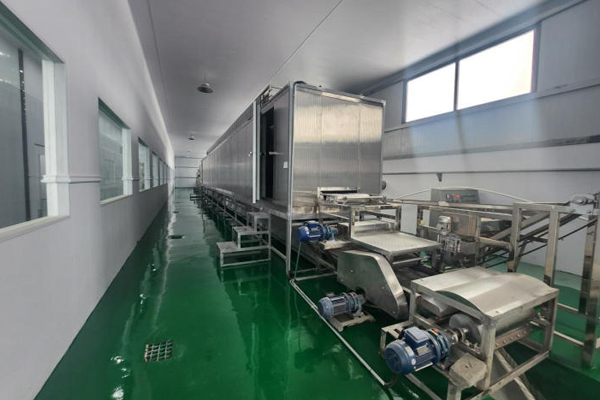
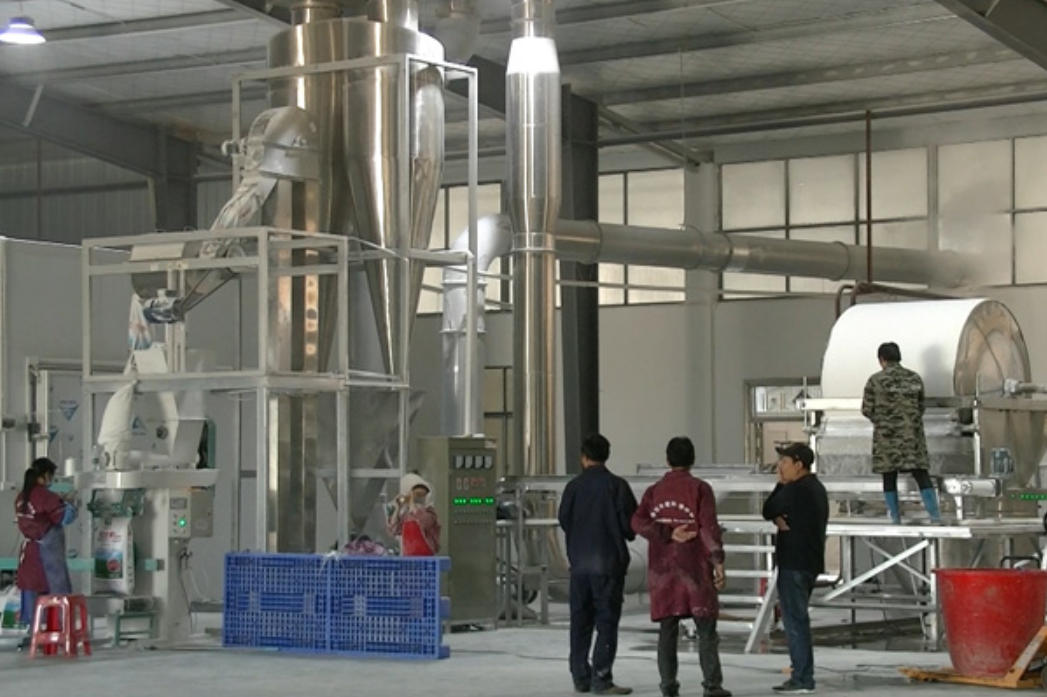
Goodway's cassava flour dryer uses airflow flash-drying technology, and the company's current product range lists drying capacities from approximately 100 to 2,000 kg/h for cassava flour and starch applications.
The dryer should therefore be sized around actual wet-material load, not only the desired finished-flour output.
Wet vs Dry Cassava Flour Processing: Which Is More Cost-Effective?
Wet and dry cassava flour processing differ mainly in moisture handling, equipment requirements, energy use and control over final quality.
|
Factor
|
Wet Processing Route
|
Dry Processing Route
|
|
Dewatering
|
Required before drying
|
Less intensive
|
|
Drying energy
|
Usually higher
|
Generally lower
|
|
Process control
|
Higher
|
Simpler
|
|
Equipment investment
|
Higher
|
Lower
|
|
Commercial consistency
|
Generally better
|
More dependent on raw material/process
|
Wet processing with grinding, pressing and controlled drying usually requires more machinery but can provide a more controlled commercial process. Simpler dry routes may reduce capital investment where output and quality requirements are less demanding.
The better option depends on production scale, local energy prices and the required flour specification.
How Yield Affects the Cost per Ton of Cassava Flour
Cassava flour production cost per ton depends partly on how much finished flour is recovered from the fresh cassava entering the factory.
Yield should not be treated as one fixed percentage because fresh-root moisture, variety, peeling losses, processing losses and final flour moisture all vary.
A simple procurement model is:
Raw material cost per ton of flour = Fresh cassava required × cassava purchase price
If processing losses increase, more fresh cassava is needed for the same flour output. Improving washing, peeling control, material transfer and recovery can therefore reduce cost even without increasing machine speed.
For investment analysis, buyers should calculate yield using their own raw material rather than relying on a universal conversion ratio.
What Should Buyers Include in a Cassava Flour Machine RFQ?
An accurate RFQ should give the supplier enough production and site data to size the complete cassava flour processing machine correctly.
Include:
-
Fresh cassava input per day or hour
-
Required finished-flour output
-
Working hours per day
-
Required flour fineness and moisture
-
Automation level
-
Available electricity and fuel
-
Factory dimensions
-
Packing requirements
-
Target budget and project schedule
This information helps prevent a quotation where washing, grinding and drying equipment have mismatched capacities.
Conclusion
The cassava flour machine price depends on much more than the cost of one grinder or mill. Capacity, drying technology, automation, yield and the number of processing stages all influence total investment.
For a commercial cassava flour production line, buyers should first define raw cassava supply, finished output and product quality, then compare quotations based on the same complete process configuration.
FAQ About Cassava Flour Machine Price
Is there one standard cassava flour machine price?
No. Price varies with capacity, automation, equipment configuration and project requirements.
What capacity is available for commercial flour production?
Goodway currently publishes complete cassava flour lines from about 300 to 2,000 kg/h output.
Does a complete line include a dryer?
Usually yes for mechanized commercial flour production, although the exact configuration depends on the project.
Does higher capacity always mean lower production cost?
Not necessarily. An oversized plant can increase capital and energy costs if raw cassava supply is insufficient.
What information is needed for an accurate quotation?
Provide raw cassava input, target output, working hours, flour specification, utilities, automation level and factory conditions.
 EN
EN
 fr
fr  es
es  it
it  pt
pt