In cassava starch processing, separation efficiency directly affects starch recovery, purity, and the stability of downstream dewatering. A hydrocyclone separator uses centrifugal forces generated by fluid flow to separate starch particles and impurities from starch milk. For processors planning a continuous starch line, understanding how the hydrocyclone works, how it compares with other separation equipment, and what process data should be provided for equipment selection can make the sourcing process more precise.
What Is a Hydrocyclone Separator in Cassava Starch Processing?
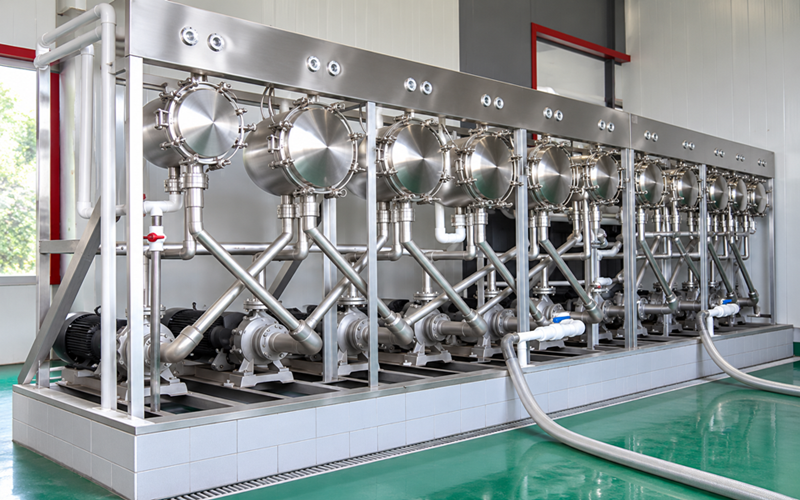
A hydrocyclone separator is a liquid-solid separation device that uses a controlled swirling flow rather than a rotating mechanical element. Cassava starch milk enters the hydrocyclone tangentially under pressure, creating a vortex inside the cone-shaped chamber.
The resulting centrifugal force causes particles with different densities and sizes to move differently within the flow. In starch processing, this principle can be used for concentration and purification of starch milk. A properly configured system can connect multiple hydrocyclone stages to progressively improve separation performance.
Unlike equipment that relies primarily on a screen or mechanical filtration surface, the hydrocyclone works through fluid dynamics. This makes configuration, feed pressure, concentration, flow rate, and stage arrangement important when determining how the system should operate.
How Hydrocyclones Concentrate and Purify Starch Milk
The main separation process begins when starch milk enters the hydrocyclone at a controlled pressure. The swirling flow generates centrifugal forces, directing heavier or unwanted components toward the outer wall while the lighter fraction follows a different flow path.
In a cassava starch line, the equipment may be arranged in multiple stages rather than used as a single separation unit. This allows the process to address concentration and purification requirements progressively.
The actual performance depends on several variables:
Feed concentration: Starch milk concentration affects the behavior of particles inside the hydrocyclone and should match the intended configuration.
Feed pressure: Stable pressure helps maintain predictable flow conditions and separation performance.
Flow rate: The hydrocyclone system should be sized around the required processing capacity rather than nominal machine dimensions alone.
Stage configuration: Multiple stages can be arranged for different concentration and purification objectives.
Underflow and overflow control: The discharge streams need to be coordinated with the following process stages.
GOODWAY's cassava starch hydrocyclone extraction equipment is designed for starch separation and purification applications, with the configuration determined according to the processing requirements.
Hydrocyclone vs. Centrifugal Separator: When Should Each Be Used?
Hydrocyclones and centrifugal separation equipment both use centrifugal effects, but their mechanical structures and operating principles are different. A hydrocyclone has no conventional rotating bowl or mechanical rotor; separation is created by the pressure-driven vortex inside the cyclone body.
A centrifugal separator can provide another separation approach within a cassava starch processing line. The appropriate choice depends on the material condition, required separation function, throughput, and position of the equipment within the process.
| Factor | Hydrocyclone | Centrifugal Separator |
| Main mechanism | Pressure-driven vortex | Mechanical centrifugal action |
| Moving rotor | No conventional rotor | Mechanical rotating components |
| Typical consideration | Concentration and purification | Separation and screening functions |
| Configuration | Often arranged in stages | Depends on equipment design |
| Key operating factors | Pressure, flow, concentration | Speed, feed, separation conditions |
These machines should not automatically be treated as direct substitutes. In some production lines, different separation technologies can serve different stages of the overall process.
How to Select Hydrocyclone Capacity and Configuration
Hydrocyclone selection should begin with process data rather than equipment dimensions. The required starch production capacity, feed concentration, flow rate, and separation objective all influence the number and arrangement of hydrocyclone units.
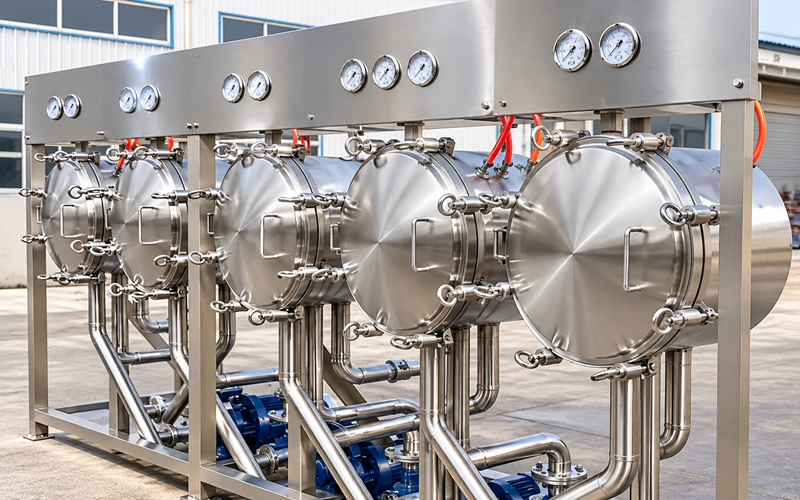
For a larger production line, multiple hydrocyclones may be arranged in parallel or in sequential stages. Parallel arrangements can help handle higher flow rates, while staged configurations can support repeated concentration or purification.
A rotary vacuum filter may also be considered at an appropriate downstream stage when the process requires further solid-liquid separation and dewatering. The hydrocyclone and vacuum filtration stages serve different functions, so their capacities should be coordinated rather than selected independently.
When comparing configurations, buyers should consider:
Required starch output per hour
Feed concentration and temperature
Target starch purity
Available feed pressure
Number of separation stages
Installation space and piping arrangement
Required downstream dewatering capacity
What Process Data Should Buyers Provide for a Hydrocyclone Quote?
A supplier needs more than a simple request for a hydrocyclone separator to prepare a useful quotation. The RFQ should describe the actual cassava starch process and the operating conditions under which the equipment will be installed.
Useful information includes the raw cassava processing capacity, expected starch milk flow rate, feed concentration, target starch purity, existing equipment, available utilities, and required installation configuration. Buyers should also clarify whether the hydrocyclone will be used for initial concentration, purification, or several stages of separation.
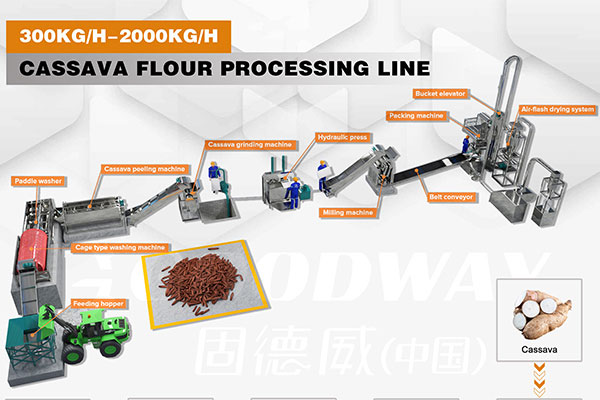
GOODWAY's starch processing equipment can be considered as part of a broader cassava starch production line. Providing information about upstream extraction and downstream filtration allows the equipment configuration to be evaluated as a complete process rather than as an isolated machine.
Conclusion
A hydrocyclone separator can play an important role in cassava starch concentration and purification by using pressure-driven centrifugal separation. Its performance depends on feed conditions, pressure, flow rate, concentration, and stage configuration. Buyers should therefore compare hydrocyclone systems based on the complete process requirement rather than equipment size alone. Understanding the role of centrifugal separation and downstream filtration also helps create a more coordinated starch processing line.
FAQ: Hydrocyclone Separator Operation and Maintenance
How does a hydrocyclone separate starch milk?
It creates a high-speed vortex from pressurized feed flow. Differences in particle behavior within this flow allow the starch milk to be separated into different discharge streams.
Does a hydrocyclone have rotating parts?
A conventional hydrocyclone does not require a mechanically rotating bowl or rotor. Separation is generated by the pressure-driven swirling flow.
Can hydrocyclones be used in multiple stages?
Yes. Multiple units can be arranged in parallel or sequential stages depending on required flow capacity and concentration or purification objectives.
What information is needed to select a hydrocyclone?
Important data includes feed flow rate, starch milk concentration, required capacity, separation objective, operating pressure, target purity, and downstream equipment requirements.
Is a hydrocyclone the same as a centrifugal separator?
No. Although both can use centrifugal effects, their structures and operating mechanisms are different. Selection should be based on the specific separation task within the processing line.
 EN
EN
 fr
fr  es
es  it
it  pt
pt