In industrial starch production, the material changes significantly as it moves from extraction to final drying. Terms such as starch milk, wet starch, and dry starch describe different physical states of starch during processing, not three different starch varieties. Understanding the differences is important for starch manufacturers because each state requires a different treatment to achieve efficient separation, moisture removal, and final product quality.
Starch Milk Is a Suspension, Not a Gelatinized Starch Paste
Starch milk is a water-based suspension containing dispersed starch granules. It is produced after raw materials such as cassava roots are crushed or grated and the released starch is separated from fibrous materials using water and screening equipment.
Unlike gelatinized starch paste, starch milk contains ungelatinized starch granules suspended in water. The granules have not been intentionally cooked into a thick paste.
Its main characteristics include:
Water is the continuous liquid phase.
Starch granules remain dispersed in the suspension.
Fine fibers and other impurities may still be present before purification.
Its concentration depends on the extraction and separation process.
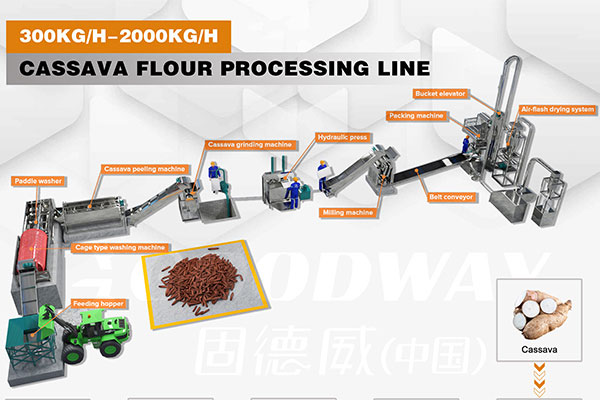
In a cassava starch processing line, starch milk is transferred to screening, refining, and concentration stages. These operations remove unwanted materials and prepare the suspension for subsequent water removal.
It is important not to confuse starch milk concentration with the moisture content of solid starch. They describe different material conditions and require different measurement approaches.
How Screening and Refining Change the Starch Slurry
After starch extraction, the suspension may contain fine fibers, residual pulp, soluble substances, and other impurities. Screening and refining help improve the purity of the starch before dewatering.
The main functions are:
Screening: Separates larger fibrous materials from the starch-rich liquid. Different screening stages can be used to remove progressively finer impurities.
Refining: Further separates unwanted components and helps improve starch purity.
Concentration: Reduces the amount of water relative to the starch solids, producing a more concentrated starch suspension.
In modern processing systems, hydrocyclones and centrifugal equipment may be used for purification and concentration, depending on the raw material and plant configuration.
These stages do not simply remove water. Their primary purpose is to separate starch granules from unwanted components and prepare a cleaner, more concentrated suspension.
According to the FAO's technical description of cassava processing, starch extraction involves crushing, screening, separation, and subsequent processing of the starch-rich liquid.
Reference: FAO – Cassava Processing: Cassava Flour and Starch.
What Mechanical Dewatering Removes from Starch Milk
Mechanical dewatering is the stage that converts concentrated starch milk into wet starch.
Instead of relying on heat to evaporate water, mechanical equipment separates a large portion of the liquid from the starch solids through filtration, centrifugation, or other suitable separation methods.
The resulting material is commonly called wet starch or starch cake.
Its characteristics include:
A much higher solids content than the original starch milk.
Residual moisture remaining between and around starch granules.
A semi-solid consistency rather than a free-flowing liquid suspension.
The need for further drying when dry starch is the target product.
For manufacturers, effective dewatering is important because it reduces the amount of water that must subsequently be evaporated.
Goodway provides a starch dewatering and drying system for this part of the processing operation.
The mechanical separation stage and thermal drying stage should be understood as complementary processes: the former removes water mechanically, while the latter reduces the remaining moisture through evaporation.
Why Wet Starch Still Needs Thermal Drying
Wet starch is not the same as finished dry starch. Although mechanical dewatering removes a substantial amount of water, the remaining moisture must be reduced further when the production target is a dry powder.
Thermal drying uses heated air or another suitable heat-transfer method to evaporate residual water from the wet starch.
The difference between the two operations is straightforward:
| Processing Stage | Material Condition | Main Function |
|---|
| Starch extraction | Starch milk | Release and separate starch granules |
| Screening and refining | Purified starch suspension | Remove impurities |
| Mechanical dewatering | Wet starch cake | Remove water mechanically |
| Thermal drying | Dry starch powder | Evaporate residual moisture |
This distinction matters because sending a highly diluted starch suspension directly into a conventional drying stage can increase the amount of water that needs to be evaporated.
The preceding dewatering stage therefore plays an important role in preparing the feed for thermal drying.
Actual moisture targets depend on the raw material, equipment configuration, and final product specifications. Different processing lines should not use one universal moisture value.
How Flash Drying Turns Wet Feed into Dry Starch Powder
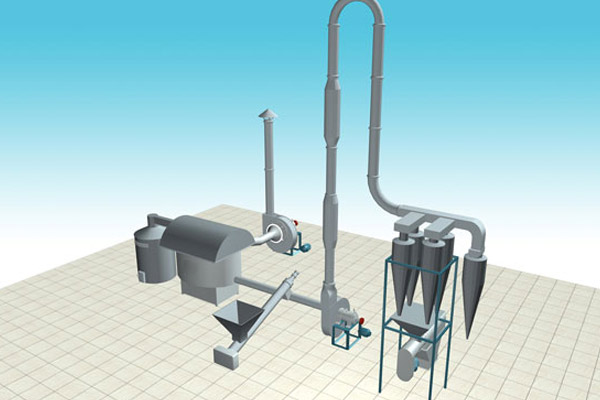
Flash drying is commonly used in industrial starch processing to rapidly remove residual moisture from mechanically dewatered starch.
In a typical pneumatic drying arrangement, wet starch is dispersed and conveyed through a stream of heated air. Heat transfers to the material, allowing water to evaporate during its movement through the drying system.
The general process involves:
Feeding mechanically dewatered starch into the drying system.
Contacting the wet material with heated air.
Evaporating residual moisture during pneumatic conveying.
Separating dried starch particles from the conveying air.
Collecting the powder for subsequent screening and packaging.
The final material is a dry starch powder with moisture content controlled according to the required product specification.
Goodway's starch dryer is designed for this drying application.
Flash drying is not simply an extension of mechanical dewatering. It performs a different task: removing the remaining moisture through heat and mass transfer.
Starch Slurry Concentration and Moisture Content Measure Different Things
One common source of confusion in starch processing is treating slurry concentration and wet starch moisture content as interchangeable measurements.
They are not the same.
Starch slurry concentration generally describes the proportion of starch solids in a liquid suspension.
Wet starch moisture content describes the amount of water remaining in a solid or semi-solid starch material, usually expressed on a wet basis unless otherwise specified.
For example, a slurry containing 20% starch solids has a different physical condition from a wet starch cake containing 20% moisture.
The two measurements describe opposite components of different material states.
| Parameter | Starch Milk | Wet Starch |
|---|
| Physical state | Liquid suspension | Semi-solid cake |
| Main measurement | Solids concentration | Moisture content |
| Main concern | Starch concentration and purity | Residual water |
| Next processing requirement | Refining and dewatering | Thermal drying |
For accurate production monitoring, manufacturers should always specify the measurement basis, sampling method, and material stage.
Using the wrong measurement can lead to incorrect process calculations and misunderstandings when communicating specifications between equipment suppliers and plant operators.
Conclusion
Starch milk, wet starch, and dry starch represent three distinct material states in industrial starch production.
Starch milk is a suspension of starch granules in water. Screening and refining remove impurities, mechanical dewatering converts the suspension into wet starch, and thermal drying removes the remaining moisture to produce dry starch powder.
Understanding these differences helps manufacturers coordinate individual processing stages, evaluate moisture-removal requirements, and select suitable equipment for their production lines.
FAQs
What is the difference between starch milk and wet starch?
Starch milk is a liquid suspension, while wet starch is a semi-solid material after mechanical water removal.
Is starch milk the same as starch paste?
No. Starch milk contains dispersed starch granules, whereas starch paste is formed after starch gelatinization.
What is the purpose of starch dewatering?
Mechanical dewatering removes a substantial portion of water before thermal drying.
Why is wet starch dried after dewatering?
Residual moisture must be reduced further to obtain dry starch powder.
What is a flash dryer used for in starch production?
It uses heated air and pneumatic conveying to evaporate residual moisture from wet starch.
Are starch slurry concentration and moisture content interchangeable?
No. Slurry concentration measures solids in a suspension, while moisture content measures water in a material.
 EN
 fr
 es
 it
 pt