Fresh cassava roots can develop blue-black or brown streaks shortly after being harvested, even when they initially appear healthy. This phenomenon is known as postharvest physiological deterioration (PPD), a major challenge for cassava farmers, processors, and starch manufacturers. Unlike ordinary microbial spoilage, PPD begins as a physiological response to harvesting and handling stress. Understanding why it occurs helps processing businesses reduce raw material losses and maintain more consistent product quality.
Recognizing PPD in Cassava Roots Before Factory Intake
Postharvest physiological deterioration (PPD) is a physiological process in which harvested cassava roots develop characteristic discoloration, particularly blue-black or brown streaking in their vascular tissues.
The first visible symptoms may appear inside the root rather than on its outer skin.
Common indicators include:
Blue-black or brown streaks in the vascular tissue.
Discoloration around cut or damaged ends.
Progressive internal discoloration after harvesting.
Changes in the appearance and processing quality of fresh roots.
Research indicates that visible PPD symptoms commonly develop within 24–72 hours after harvest, although the onset varies with root condition, variety, and environmental factors.
For factory operators, examining cross-sections of incoming roots can help identify early discoloration that may not be visible externally.
However, the absence of visible PPD does not independently establish food safety or guarantee raw material quality.
How Harvesting Damage Can Trigger Physiological Deterioration
Mechanical damage is one of the major triggers of cassava PPD.
When roots are pulled from the ground, cut, broken, or bruised, damaged tissues activate biochemical stress responses. These include the production of reactive oxygen species (ROS) and changes in phenolic metabolism.
The resulting oxidative processes contribute to the blue-black or brown discoloration associated with PPD.
Common sources of damage include:
Breaking roots during manual digging.
Cutting or bruising roots during mechanical harvesting.
Dropping roots during collection.
Excessive abrasion during transportation.
Poor handling during loading and unloading.
This is why harvesting practices matter beyond simply removing roots from the soil.
Appropriate harvesting equipment and operating methods can help reduce unnecessary breakage and physical injury.
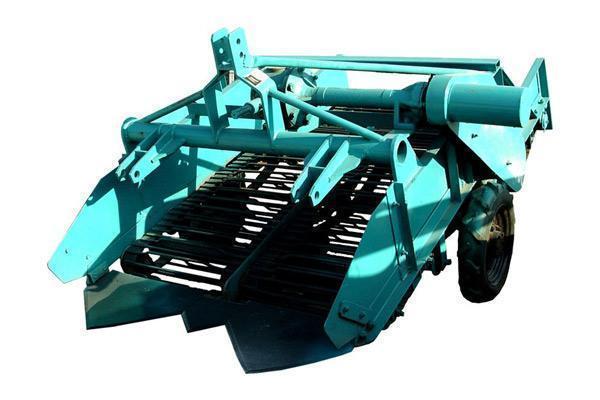
For larger farming operations, a suitable cassava harvester can be considered as part of a more coordinated harvesting process. Actual damage levels still depend on soil conditions, machine adjustment, operator practices, and cassava variety.
Why Harvest-to-Processing Time Matters for Fresh Roots
Unlike many agricultural raw materials, cassava roots deteriorate relatively quickly after harvest.
Once detached from the plant, they begin physiological processes that reduce their storage quality. If damaged roots remain untreated for extended periods, PPD can progress and become more widespread.
Several factors influence the rate of deterioration:
Root damage: More extensive mechanical injury can create additional sites where deterioration begins.
Temperature: Storage temperature influences metabolic activity and the rate of deterioration.
Humidity and ventilation: Environmental conditions affect moisture loss and the storage environment.
Variety: Different cassava varieties can show different levels of PPD tolerance.
For industrial processors, minimizing unnecessary delays between harvesting and processing is therefore an important operational consideration.
There is no single storage-life limit suitable for every cassava variety and production environment. Processing schedules should be based on actual raw material conditions rather than an assumed universal number of days.
Washing Removes Soil but Does Not Reverse PPD
Washing is an important preparation stage in cassava processing, but it does not reverse physiological deterioration inside the root.
The primary purpose of washing is to remove soil, sand, and other surface contaminants before peeling, crushing, or further processing.
It is important to distinguish between external cleanliness and internal raw material quality.
| Processing Concern | Washing Function |
|---|
| Soil attached to the root | Removes surface soil |
| Sand and loose debris | Helps remove physical contaminants |
| Internal blue-black streaking | Does not reverse PPD |
| Broken or deteriorated tissue | Does not restore damaged tissue |
| Raw material consistency | Requires inspection and appropriate sorting |
For processing facilities, washing should be integrated with incoming material inspection rather than treated as a substitute for quality control.
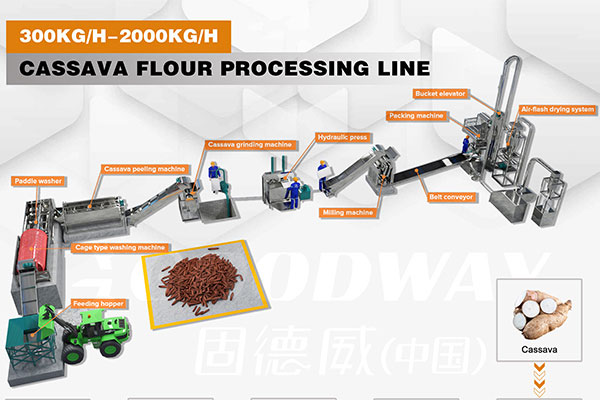
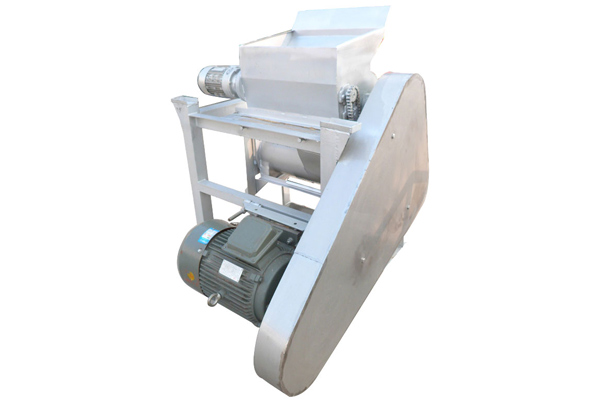
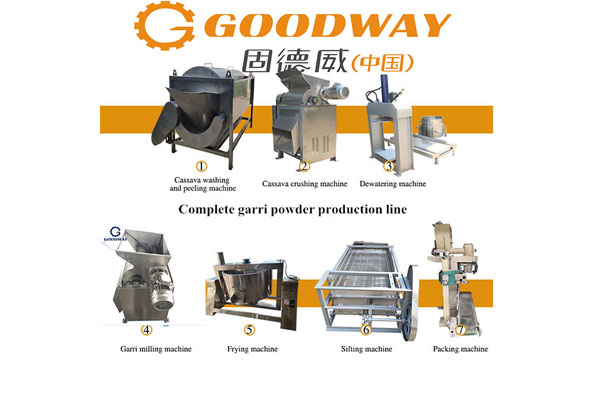
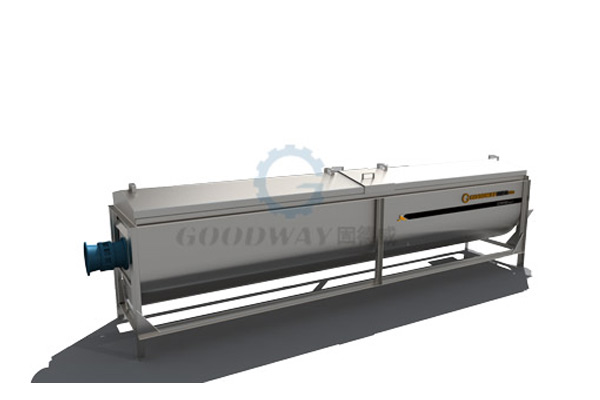
Goodway offers a cassava washing machine for cleaning cassava roots before subsequent processing operations.
The equipment helps prepare raw materials for processing, but it should not be described as a treatment for PPD.
Why Raw Root Quality Matters Before Starch and Flour Processing
Cassava PPD affects more than the visual appearance of fresh roots. It can also reduce their suitability for commercial processing.
For starch and flour manufacturers, raw material consistency is particularly important because the quality of the incoming roots influences subsequent processing operations.
Potential concerns include:
Changes in internal tissue condition.
Reduced raw material marketability.
Greater variability between incoming batches.
Additional sorting and handling requirements.
Increased risk of processing losses.
The exact impact on starch yield, color, and final product specifications depends on the cassava variety, deterioration severity, and processing method. These effects should not be assigned universal numerical values without supporting test data.
A practical factory inspection process should therefore consider root appearance, physical damage, batch consistency, and processing suitability together.
Coordinating Harvesting, Transport and Washing with Processing Capacity
Reducing PPD-related losses requires coordination across the raw material supply chain.
Harvesting, transportation, unloading, inspection, and washing should operate as connected stages rather than independent activities.
A practical coordination approach includes:
Harvest roots according to the factory's raw material demand.
Minimize unnecessary cuts, bruises, and breakage during harvesting.
Use suitable collection and transportation methods.
Inspect incoming batches for physical damage and discoloration.
Schedule washing and subsequent processing without avoidable delays.
For processing plants, the objective is to prevent large quantities of freshly harvested roots from accumulating without a clear processing schedule.
The capacity of harvesting equipment, transportation arrangements, washing systems, and downstream processing machinery should be considered together.
This approach can improve raw material handling consistency without assuming that machinery alone eliminates postharvest deterioration.
Why Better Handling Does Not Give Every Cassava Variety the Same Storage Life
Good harvesting and handling practices can help reduce damage, but they cannot completely eliminate natural differences in PPD susceptibility.
Cassava varieties differ in their physiological characteristics and responses to postharvest stress. Research continues to investigate genetic factors associated with delayed deterioration and improved storage performance.
Environmental conditions also influence how quickly symptoms develop.
Therefore, manufacturers should avoid applying one storage duration or preservation method to every cassava variety.
Instead, processing businesses should establish practical raw material handling procedures based on:
The cassava varieties being processed.
Harvesting and transportation conditions.
Observed damage and discoloration.
Local storage conditions.
The factory's processing schedule.
For larger operations, coordinating suppliers and processors around these factors can help reduce unnecessary losses and improve production planning.
Conclusion
Cassava postharvest physiological deterioration is a rapid biological response that commonly develops after harvesting, particularly when roots suffer mechanical damage. Its characteristic blue-black or brown vascular streaking should be distinguished from subsequent microbial spoilage.
For industrial processors, reducing root injury, shortening unnecessary harvest-to-processing delays, and inspecting incoming materials are important steps in managing raw material quality.
Harvesting and washing equipment can support a more organized processing operation, but neither can reverse PPD once physiological deterioration has developed.
FAQs
Why do cassava roots turn black after harvesting?
They develop postharvest physiological deterioration, a biochemical response often triggered by tissue damage.
How quickly does PPD develop in cassava?
Visible symptoms commonly appear within 24–72 hours after harvest, depending on conditions.
Is cassava PPD the same as microbial rot?
No. PPD begins as a physiological response, although microbial spoilage can develop later.
Can washing remove PPD from cassava roots?
No. Washing removes surface soil but cannot reverse internal physiological deterioration.
Does mechanical harvesting cause cassava PPD?
Mechanical harvesting can contribute to PPD if incorrect operation causes cuts, bruises, or broken roots.
Do all cassava varieties have the same storage life?
No. PPD susceptibility varies with genetic characteristics and environmental conditions.
 EN
 fr
 es
 it
 pt